
Understanding Stress and Burnout: Why You’re Feeling Exhausted
Over the past few weeks, I've delivered a workshop on Stress, Burnout and the Invisible Mental Load Women Carry. Throughout the workshop, I realised just how often the words stress and burnout come up - not only in the workplace, but also in my therapy room.
Many of us use these words interchangeably, but they're not the same thing.
Understanding the difference is often the first step towards understanding ourselves.
What is stress?
One of the biggest misconceptions about stress is that it's something we should eliminate from our lives.
The reality is quite the opposite.
Stress is a normal human response. It's your nervous system's way of preparing you to respond to challenge, uncertainty, change, or perceived danger. We experience it every day - before a presentation, while juggling family responsibilities, navigating difficult conversations, or managing unexpected change.
In small doses, stress is actually helpful. It can improve our focus, motivation, performance, and even keep us safe.
Our nervous system is designed to move through a natural rhythm:
Stress → Recovery → Stress → Recovery
The problem isn't stress itself. The problem begins when recovery disappears. Instead, life starts looking like this:
Stress → Stress → Stress → Chronic Stress → Burnout
Our nervous system remains switched on for longer than it was designed to.
Eventually, something has to give.
What is burnout?
Burnout rarely happens overnight.
It's usually not the result of one difficult week or one demanding project.
Burnout is often the result of carrying too much, for too long, without enough recovery.
It is a state of emotional, mental, and physical exhaustion that develops after prolonged or chronic stress.
People experiencing burnout often tell me:
"I'm exhausted, even after sleeping."
"I don't enjoy things like I used to."
"My brain never switches off."
"I feel like I've lost myself."
If any of those sound familiar, you're not alone.
Stress doesn’t only happen in your body
When people think about stress, they often picture being busy. I like to think about it differently.
Stress doesn't only happen in your body... It affects our mind, our emotions, and our body.
🧠 The Mind
Our mind tries to protect us by thinking, planning, problem-solving, overthinking, predicting.
Unfortunately, it doesn't always know when to stop.
Imagine your mind as a glass.
Every thought, responsibility, expectation, self-criticism, worry, and mental to-do list is another drop of water entering that glass. Maybe you're finding it difficult to ask for help, delegate, push back, or simply say no. Slowly, your glass begins to overflow.
Perhaps you're holding beliefs like:
"I have to do everything myself."
"I can't let anyone down."
"I should be coping better."
These beliefs can weigh heavily. A long to-do list or a big project will eventually end, giving your mind space to recover. But limiting beliefs like these don't simply disappear when the task is done. They continue taking up space in the glass, leaving less room for everything else… and making it much easier to overflow.
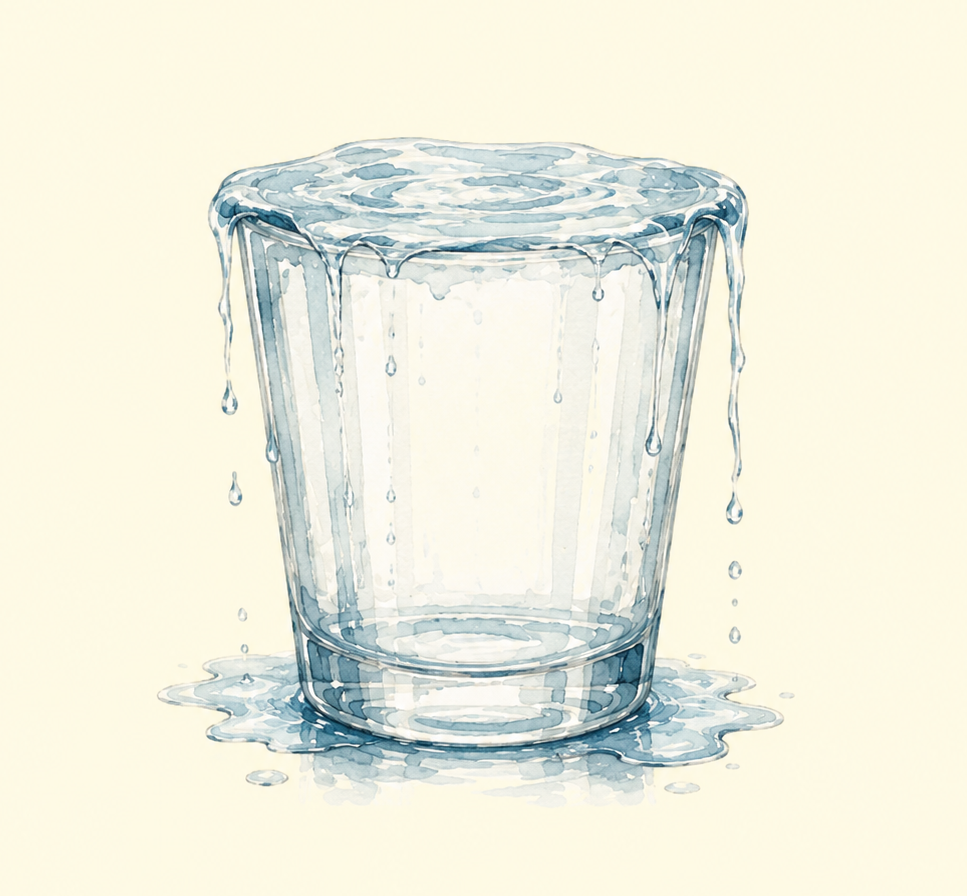
This is what I often refer to as the invisible mental load.
❤️ Emotions
Our emotional world works in a similar way… Imagine another glass.
Inside it are emotions we've never fully acknowledged… Fear. Shame. Grief. Disappointment. Anger.
Sometimes these emotions have been with us for years. Sometimes they developed in response to difficult childhood experiences or periods of chronic stress.
When we continually push emotions aside rather than making space for them, they don't simply disappear. Instead, they often continue to influence how we feel and respond to the world.
Over time, that emotional glass can also overflow.
We may notice anxiety, irritability, emotional numbness, guilt when resting, feeling overwhelmed, or struggling to regulate our emotions. Many clients describe it as feeling like they've "lost themselves."
🫁 The Body
Our body is often the first to recognise stress, even before our mind does.
When our nervous system remains activated for long periods, our body begins speaking through physical symptoms. When we don’t express emotions, we suppress them and they stay…in the body.
Common signs of burnout include:
Fatigue
Tight shoulders or jaw clenching
Poor sleep
Digestive issues
Frequent headaches
Shallow breathing
Feeling constantly "wired" or unable to relax
Sometimes I invite clients to imagine the body carrying not only its own glass, but also trying to hold the overflowing glasses from the mind and emotions.
Eventually, it simply can't carry any more. Our body isn't working against us. It's communicating with us.
Burnout is not a personal failure
One of the saddest things I hear in therapy is:
"I should be coping better."
But burnout isn't a sign that you're weak.
More often, it's a sign that you've been carrying too much, for too long - often while trying to be everything for everyone else. Your nervous system isn't failing you. It's asking for recovery.
Listening to yourself
One of the greatest skills we can develop isn't learning to ignore stress.
It's learning to understand the language of our mind, emotions, and body before they have to shout.
→ When I say, “I feel burned out,” where does that show up most - in my mind, emotions, or body?
→ Is there simply too much on my plate, and I need to push back or ask for help? Or am I drowning in beliefs and expectations that keep adding to the pressure?
→ Are there emotions I might be avoiding by keeping myself constantly busy?
→ What is my body asking for right now?
When we become curious about what each is trying to communicate, we create the opportunity to respond with care rather than simply pushing through.
In Part 2...
Understanding stress and burnout is only the beginning.
Next week, I'll explore why rest isn't always recovery, and what your mind, emotions, and body actually need to restore your energy and prevent burnout.
If you've recognised yourself in some of these signs, know that you're not alone. Therapy can provide a space to better understand the patterns contributing to stress and burnout, reconnect with yourself, and begin building healthier ways of coping. If you'd like support, I'd love to walk alongside you, you can book in a session here.
Mariana from MHealing
